NOR-SCAD-Ex
The NOR-SCAD-Ex study aims to identify safe and effective exercise strategies following spontaneous coronary artery dissection (SCAD). Patients who have experienced SCAD are often advised to restrict physical activity and frequently report uncertainty about exercise and training after the event. This may increase the risk of physical inactivity, reduced physical fitness, and psychological distress.
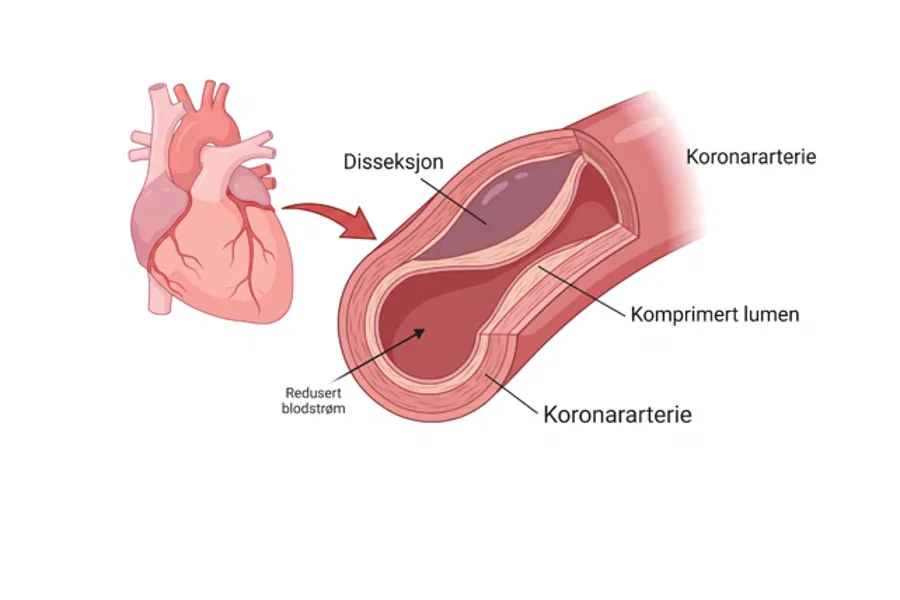
Illustration: Eirunn Røtnes. Made by BioRender.
The text has been modified by Microsoft Copilot AI.
High-intensity exercise is a well-established training approach in other areas of cardiovascular medicine. High-intensity training has been shown to significantly improve cardiorespiratory fitness and is associated with better long-term survival in patients with heart disease. We aim to investigate whether this type of exercise can also be safe and beneficial for individuals who have experienced SCAD.
A Randomised Controlled Study
In NOR-SCAD-Ex, we will compare two methods of training after SCAD: high-intensity interval training (HIIT) on a treadmill, and the current practice of advising against high-intensity training.
How is the study conducted?
The study is being conducted at ProCardio/the Department of Cardiology at Oslo University Hospital, Rikshospitalet, where participants will attend two in-person physical assessments (including cardiopulomary exercise testing). All exercise training will take place locally with supervision from a physiotherapist.
Status: Open for recruitment
Digital Tools
More information about the study
You can read more about the study on HelseNorge (external link, in norwegian).
How do I sign up?
If you have experienced SCAD and wish to participate, you can register digitally for the study via Bank-ID signing (external link, in norwegian).
Researchers Involved:
- Kristina Haugaa, Prof, MD, PhD, Project Leader
- Mette-Elise Estensen, MD, PhD
- Nina Hasselberg, MD, PhD
- Anna Astad Sørlie, MD, PhD candidate, daily management of the study
- Eirunn Røtnes, MD, PhD candidate, daily management of the study
Study Numbers:
- Regional Ethics Committee (REK): 975719
- ClinicalTrials.gov ID: NCT07785765.
Contact Information:
- anloso@ous-hf.no / 926 55 483
- eiroet@ous-hf.no / 454 85 153