Dissertation Rang Abdullah
On November 13, doctor and ProCardio fellow, Rang Abdullah, will defend his thesis on the topic "Strong muscles, weak hearts: the effects of anabolic-androgenic steroids on cardiac structure and function" for the degree of Doctor of Philosophy (PhD) at the Institute of Clinical Medicine at the University of Oslo (UiO). His trial lecture is titled "The hypertrophic grey zone in athletes: adaptation versus pathology".
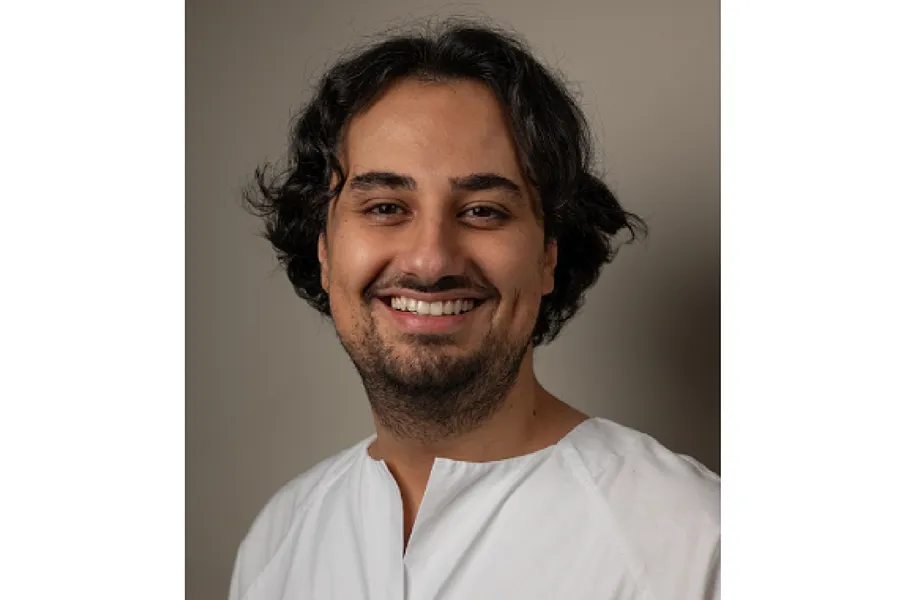
Photo: Maya Odinsen Golan
Public defence: Rang Abdullah - Institute of Clinical Medicine
Trial Lecture
- Title: The hypertrophic grey zone in athletes: adaptation versus pathology
- Time: 10.15
- Location: Runde auditorium, Domus Medica, Sognsvannsveien 9
Dissertation
- Title: Strong muscles, weak hearts: the effects of anabolic-androgenic steroids on cardiac structure and function
- Time: 13.15
- Location: Runde auditorium, Domus Medica, Sognsvannsveien 9
Summary
Use of anabolic-androgenic steroids (AAS) is a growing public health concern, particularly among young males. Although AAS use has long been suspected to cause adverse cardiovascular effects, relatively few studies have investigated this association. This thesis investigates the effects of long-term anabolic-androgenic steroid (AAS) use on cardiac structure and function in male weightlifters. Participants underwent cardiac assessment using echocardiography and electrocardiography (ECG), along with hormonal analyses of blood and urine samples.
Compared with weightlifters with no history of AAS (weightlifting controls, WLC), AAS users demonstrated increased left ventricular wall thicknesses and reduced systolic function. 10% of AAS users had severely reduced left ventricular systolic function. A longitudinal follow-up study conducted five to seven years after baseline, showed that despite an almost 50% reduction in reported weekly AAS dosage, participants who continued AAS use demonstrated persistent impaired systolic function, along with worsening of diastolic function. In contrast, former users who had discontinued AAS for an average of 11 years, showed near-normalization of cardiac structure and function. A separate study investigated whether ECG could serve as a screening tool for detecting left ventricular hypertrophy in this population. The findings demonstrated that ECG had limited ability to identify these changes.
In conclusion, this thesis demonstrates that long-term AAS use is associated with substantial adverse cardiac remodeling and left ventricular systolic dysfunction. Continued use may sustain these changes even at reduced doses, whereas cessation may be associated with reversibility of cardiac dysfunction.